Monday, December 15, 2014

Exam Review

Today in Human Geography we looked on Mr. Schick's blog for the exam review.

Our Social Studies (or Human Geo) exam is tomorrow o.o
There will be one hundred and thirty questions and we will have to do two essay questions.

Some of the material on the exam will be:
Here is what will be covered on the semester exam.

  • The Concept of Excellence / Our Twenty-First Century World
    • A Message to Garcia
    • Greek concepts: arete, polis, agora, Socrates
    • CIA World Factbook
    • Did You Know 3.0

  • Population and Settlement
    • population terms: life expectancy, CBR, CDR, developing/developed nations, RNI, net migration rate, immigration/emigration, push/pull forces, TFR
    • population pyramids
  • Political Geography
    • world leaders and important facts about the following key countries: Germany, Mexico, China, Brazil, India, Canada, Japan, Russia, Israel, the United Kingdom, Syria, France, and the United States
  • Cultural Geography
    • Slumdog Millionaire
    • key world religions: Christianity, Islam, Hinduism, Buddhism, Judaism

Here is the breakdown.
  • Questions 1 - 21: Excellence and Our Twenty-First Century World
  • Questions 22 - 57: Population and Settlement
  • Questions 58 - 82: Political Geography
  • Questions 83 - 130: Cultural Geography

You will write TWO essays on this test.  There are three topics to choose from.
  • Essay Option #1:  Socrates famously stated, "The unexamined life is not worth living." Describe the importance of this philosophy.  Discuss things you learned this semester that illustrate Socrates' words.
  • Essay Option #2: Religion, language, and ethnicity are important aspects of cultural geography.  As a student in a predominantly Christian, English-speaking school, what did you observe about people with other cultural characteristics?  Describe the differences you observed, as well as ways in which we are all similar. 
  • Essay Option #3:  The world is filled with problems and difficulties.  Discuss some of the things you learned in Human Geography this semester, and how they could help our country deal with specific domestic and international challenges.

(copied from Mr. Schick's blog)

The exam is 16 pages!

Next we talked about how the exams work. Tomorrow we have a religion test from 8-9:30 am, and then this class at 10-11:30 and then we go home to study for the rest of our exams.

I reeeeeeaaaaaaaally hope I get a good grade on this classes exam!

Friday Blog

Even though it probably does not count... on Friday we reviewed for exams. We also went over the tests that we took that would be on the exam on Tuesday.

Wednesday, December 10, 2014

Test

Today in Human Geo, we took our Cultural Geography test. It was on the movie that we watched called "Slumdog Millionaire". On the rest, a lot of it was about the religions, Christianity, Muslim, Hinduism, Buddhism, and Jews.

The test was easier then I expected, but I didn't expect it to be too hard, because their was anything really hard we had to study. I think I'll get a good grade, I got tripped up by some of the religions. Especially the Buddist and Hindus because they are simple in country terms but I think I did fairly well.

Tuesday, December 9, 2014

Today's Class


Today in Human Geo, it was Mr. Schick's birthday!
SO..... HAPPY BIRTHDAY TO YOU, HAPPY BIRTHDAY TO YOU, HAPPY BIRTHDAY MR. SCHICK, HAPPY BIRTHDAY TO YOU!
(and of course I have to add them >>>>)

Okay, he we didn't really have a "normal class" today, (not that we ever do) but he had to go to his academic meeting so we were left to study or complete homework for any class.

We have a test tomorrow on Cultural Geography.
And that is about it, soooooooooooooooooooooooooooooooooooooooooooooooo goodbyeee.

Monday, December 8, 2014

Cultural Geography

Notes continued from Friday:
-more on Buddhism:
Four Noble Truths    
-There is suffering
-Attachment to desire is the origin of suffering
-There is a cessation of suffering
-The Eightfold Path will lead to the cessation of suffering

Eightfold Path:
-Right view
-Right intention
-Right speech
-Right action
-Right livelihood
-Right effort
-Right mindfulness
-Right dedication

Judaism:
-number of adherents: 14-18 million (ninth)
-call them: Jews
-geographic location: Israel
-founder: Abraham (?)

more on Judaism:
-holy book: Talmud
Torah (the first five books of Old Testament:
  -Genesis, Exodus, Leviticus, Numbers, Deuteronomy

-beliefs: ethical monotheism - God is one, and concerned with the actions of humankind
Ten Commandments
13 Principles of Faith


The rest of the class we literally talked about nothing and their was ranting lol

Friday, December 5, 2014

Millionaire

Okay so first today was a weird day.. there was some rapping and singing and such to Slumdog Millionaire. Buy Mr. Schick's verison of Billionaire by Bruno Mars on iTunes!

NOTES...

Spatial divisions:
Examples of Spatial Divisions
-Political alliances
  -North Atlantic Treaty
  -Organization (NATO)

-Commonwealth of Nations
-Organization of American States (OAS) 

End of Cultural Geography Slideshow

Major Religions:

Christianity:
- number of adherents: around 2.2 billion largest in the world
-call them: Christians
-geographic location: Europe, the Americas, southern Africa

-Catholic Church, Eastern Orthodox, Protestants (Lutherans, Methodists, Baptists, Episcopalians etc.)

more on Christianity:
-founder: Jesus Christ (it's Abrahamic in origin)
-holy book: The Bible, especially the New Testament
-beliefs: Jesus is both hum and divine - the Son of God; he led a virtuous life; he was crucified, died, buried, and resurrected; he ascended into heaven where he reigns with God the Father.  

Islam:
-number of adherents: 1.5 billion (second largest)
-call them: Muslims
-geographic location: Indonesia, Middle East, North Africa
- Dominations: Sunnis (75-90%) Shiites (10-20%)

more on Islam:
-founder: Muhammad (570-632)
-holy book: Qur'an
-beliefs: monotheistic, Abrahamic
  -Five Pillars (testimony, prayer, alms-giving, fasting, pilgrimage)
-Muslims see their purpose in life as serving and submitting to Allah (God), and observing Islamic law

Hinduism:
-number of adherents: 1.1 billion (third largest)
-call them: Hindus
-geographic location India, Nepal
-holy book: the Vedas - eternal truths revealed to ancient sages; composed in verse form (meant to be sung and easily memorized)

more on Hinduism
-founder: no distinct founder - it is a series of intellectual or philosophical points of view, rather than a rigid, strict set of beliefs - probably the oldest religion, although Hinduism is less a religion than a way of life, or a faith

Examples: "As a person puts on new clothes and discards old and torn clothes, similarly an embodied soul enters new material bodies, leaving the old bodies."

In other words.....reincarnation

Buddhism:
-number of adherents: 500 million to 1.5 billion (estimates vary quite a bit)
-call them: Buddhists
-geographic location: southeast Asia, China, Nepal, Japan (there are 1.2 million Buddhists in the United States.


Wednesday, December 3, 2014

Slide Showwwwwww

Examples of cultural characteristics
-Religion can be both a unifying force.
-There are five major religions in the world today -- Hinduism, Buddhism, Judaism, Christianity, and Islam.

They have millions of followers all believing the same thing.

Examples of cultural characteristics
-Religion can also be a dividing force around the world.
-Hindus and Muslims fight in India (Hindu) and Pakistan (Muslim).

There are conflicts between Catholics and Protestants (Two forms of Christianity) in Northern Ireland.

Jews, Christians and Muslims all claim Jerusalem as their religions holy site. They are constantly fighting over the land.

Spatial divisions:
-Spatial divisions are how we divide the livable space found on the earth by establishing social, economic, and political control.

-You can be a member of more than one spatial group.
-Spatial divisions can also cause conflicts or cooperation
Examples of Spatial
-Divisions:
-Countries
-Economic alliances
 -European Union (EU)
 -Organization of Petroleum
   -Exporting Countries (OPEC)


Tuesday, December 2, 2014

Cultural Geography

Back to the old slide shows:

Cultural Characteristics:
are parts of a group's everyday life. They are the ideas and themes which the group will teach to all members. These same characteristics can also link or divide a region.

Examples: of cultural characteristics would be language, religion, and ethnic heritage. 
Examples of cultural characteristics

-Language
 Ex(s):  -Arabic unites the Arab world
             -Spanish united the Hispanic world

Brazil (!!!!!!!!!!) is the only South American nation which does not speak Spanish. It speaks Portuguese.

Canada is a bilingual nation. French and English are their official languages.

Examples of cultural characteristics:
-Switzerland has multiple languages but very little conflict between the groups.
-English is now considered the world language and is used for most business transactions around the world.

Examples of cultural characteristics:
-Ethnic Heritage
 -In Yugoslavia, any ethnic groups were made into one country (Serbs, Croats, Bosnians, Albanians).

When strong leadership died out, the different groups fought a very bloody civil war and now they all have separate countries.

Examples of cultural characteristics:
-In the countries of Rwanda and Burundi in Africa, Two ethnic groups are dominant, the Tutsis and the Hutus

-The Hutus are dominant in one and they persecute the Tutsis, and the Tutsis are dominant in the other and they persecute the Hutus. It has led to almost constant war between the groups

Examples of cultural characteristics:
-The US and Switzerland have peacefully merged multiple ethnic groups in their countries
-Korea, China and Japan have primarily one ethnic group

Monday, December 1, 2014

Slum Dog Millionaire

Today in Human Geography we were going to go back to the power point we were doing before the movie but some people (including me) did not get to see the rest of the movie Slum Dog Millionaire.
Let me just say that that movie is my one of my new favorite movies now. It ties in so much about what we are suppose to be learning with cultural geography.

I love the way the movie ended too, Jamal finally found Latika only to have her taken away by his own brother! He was under the influence of this gangster he was working for. But Jamal's brother finally realized that what he was doing was wrong to his brother and he basically died giving Jamal is wishes. PLUS Jamal is a billionaire now!

Even the whole Indian dance was great! I've seen some Bollywood movies that always have those dances at the end of their movies. It was really cool also to hear how their music is reaaaaaaaaaaaaaally different from ours. I actually really liked the music, the dancing.... well lets just say I'm not going to go out in the middle of the hallway and do it, but it was pretty cool too.

Can't wait for the next movie!

Friday, November 21, 2014

Movie Day

Today in Human Geo we watched a movie called

This movie was in the slumps of India in Mambi. We have to pick out things from the movie that is different from American culture.

1. They trade a lot of things for money. The little children in the movie were trading things in like an autographed picture of a famous actor.

2. The have "religious attacks". Say if a certain village is Muslim, and another religion didn't like that religion then they were attack and burn down house, kill the people etc.

3. The police and the peoples relationship is not very good. They are abusing the people and the hurting them, like torturing.

4. Schools are over crowded, teachers are clipping them over the head with books.

5. The children are cursing and they ditch school, but they don't really get in trouble for it besides their parents

6. The people in Mambi, especially the slumps obviously are very poor, even the poor people in the United States are waaaaaaaaaaaaaaaay better off then most poor families in India.

7. And lastly sometime as simple as the house structures, they are very very small!

Wednesday, November 19, 2014

Spotify Cont.

Today in Human Geo, Mr. Schick was not here because he just wasn't so we had a sub. We had to check the blog to see what we were suppose to do, so anyway it told us to continue on our Spotify projects.
I really like this project because it's like a good excuse to listen to some good music and new music too. So from yesterday my songs were:

1. One Direction- Don't Forget Where You Belong
2. Houndmouth- On the Road

My songs for today are:

1. Moving Out - Billy Joel: I absolutely love this song by the way <3 But they is a good song because it's talking about....moving out...as the title says

2. Home- Phillip Phillips: It's a good song talking about moving to a new place and their emotions to the it, and how one of the other people are nervous but they are trying to tell them it' going to be okay and how they are going to make that place their home.

3. (This one could or couldn't depending on how you time it) Don't You Worry Child- Swedish House Mafia: This song is kind of talking about the guys childhood and him remembering his childhood and maybe home town (?)

It's not much but it's a start (: more to come!

Tuesday, November 18, 2014

Spotify Songs Talking About Push and Pull Forces

Today in Human Geography we had to get a playlist together that describes push and pull forces. The songs that I found so far are:

1. Don't Forget Where You Belong by One Direction: This song is appropriate for this because the song was written about leaving your home to go to different places but of any type of reason. It's suppose to be like a sad song for moving away from your country.

2. On the Road by Houndmouth: This song is just basically taking about moving someplace where no one knows them. You say it at least once or twice- more like three thousand times...

That's all I've found but I'm going to find more!

German National Athem

Monday, November 17, 2014

Today's Interesting Class...

Today in Human Geo it was a very interesting class.

Mondays classes are always slow, so it kind of went by really slow. I am really tired because I stayed up until one am waiting for a release for my fave bands album, BUT life goes on and I'm here :D:

Today Mr. Schick told us that he won his academic contest, 1st place! WOW! Okay so anyways, we spent most of the class answering these questions like the academic team would do. It was pretty cool but I think that if I did it I would stress out to much :)

For the rest of the class, we started a new section called Cultural Geography.
Here are my notes:
Cultural Geography:
"Generic Names for Soft Drinks by county"
The Picture: It showed the percentage of names that people call soda
Examples: Pop, Coke, Soda, Other, Etc.

-There are geographic differences in the way people call sodas.

We also got into a little discussion about Maryland and Chicago cultures, and how you usually follow your parents cultures.

Cultural Characteristics:
-it is parts of a groups everyday life. They are the ideas and themes which the group will teach to all members. These same characteristics can also link or divide a region.

-Examples cultural characteristics would be language, religion, and ethnic heritage.


Friday, November 14, 2014

Test Day

Today in Human Geo we finally took our Countries Leaders test.

At first I was a little scared to take it because we did go over a lot of information about the countries and their government, leaders etc. But the test was fairly easy. If someone didn't study but listened in class I think they would get a good grade.

I'm not sure what I'm going to get but I think I did well.. I liked that the essay was asking about the assassination issue in all the classes. I think I answered that pretty well and hopefully I did!

So overall it was a "good" test. (:

Wednesday, November 12, 2014

Presentations Today.... No Test!!!!!

Today in Human Geo we had more people that had to present so here are my notes:

Russia: (cont.)
Dmitry Medvedev:
-Prime Minister of Russia
-previously served as a third president of Russia, from 2008-2012
-United Russia Party

Three Branches:
-Legislative Brach: the bicameral Federal Assembly of Russia, 450 member State Duma and 166 member Federation Council
-adopts federal law, declares war, approves treaties, has the power of the purse and the power of impeachment of the President.
-Execution Branch: The president is the supreme Commander-in Chief of Armed Forces
-appoints the Government of Russia

Judiciary Branch: -The Constitutional Court, Supreme Court, Supreme Court of Arbitration and ower federal courts

United Russia:
-the main political party is called the United Russia
-holds 238 of the 450 seats in the State Duma
-Founded in December 21

Russian Military:
-countries area afraid to attack Russia, because of Putin and his nuc. weapons.
-Putin is a very strong leader, made the military very strong and aggressive.
-Russia spent nearly $72 billion dollars on arms in 2011, and spend more to keep the military strong. (more then the US military)

Russia Facts:
-largest country in the world, taking up more than one-eights of the Earth's land
-capital-Moscow
-the population of Russia is 149,476,000
-the money used in Russia is called Rube


Brazil: <<<<<<<<<<<<<<<<<<333333333333333333333
President Dilma Rousseff

Government: has a federal republic form of government with Dilma Rousseff as their president.

Federal Republic:
-A federation is a central form of government.
-Republic refers to this central government with a republican form
-The people can vote for whoever they want

Brazilian Presidency:
-4 year terms
-re-elected two time in a row
-elected any number of times with different president in between

Dilma Rousseff:
-Rousseff was elected as president in 2011 (51% of the votes).
-Re-elected about three weeks ago (week ago)
-Her last term for now, but can come back four years after her second term.

In 1970, Dilma Rousseff was arrested for participating in a political guerilla riot. She was arrested and tortured and released three years later when she got into local politics. (This time was when the military took control over everything.)

Ways to remove the President:
-Impeach
-Re-elect
-Assassination

Most people of Brazil are very happy with their President and government.


Mexico:
Enrique Pena Nieto President:
-Member of Institutional Revolutionary Party
-Served as governor of the state of Mexico from 2005-2011
-Six year terms

Change in Leadership:
-Re-elected
-Impeached
-Assassinated

Federal Republic

Mexican drug wars:
-70% of guns recovered from Mexican criminal activity

Facts:
-Education is mandatory ages 5-15

Tuesday, November 11, 2014

Today (11-11-14)

First Happy Veteran's Day! Unforunately, we did not have off today but all is forgiven...

Anyways, today's Human Geo class, Mr. Schick wasn't there, so on his website we had a power point that we had to look at for the test tomorrow.
I don't think it's going to be too bad, if you listened. The countries were very interesting to do this section.

So for the class today we had a sub and I looked at the power point and listened to music and that's about it.

Until next time...

Monday, November 10, 2014

More Presentations..

My notes for today's presentations:
Syria:
Type of government: republic under an authoritarian regime
-They harshly suppress the opposition and it also lacks human rights and free elections

President: Bashar al-Assad
-his father was born to poor family;
(Mother ad Father: Aniseh and Hafez al-Assad)

Syria has been republic under a controlled government since 1941 (73 years)

Ways to get rid:
-The country being taken over by another
-Revolutionary war
-Assassination

Results of the last election (June 2014):
-Assad won and the country went down because it was rigged (the votes)
-He threatened the people to vote for him

How it was rigged:
-"counting wrong" on purpose
-bombing and threathening

President:
-In Syria, they run seven year terms and Assad be there until 2021

Next was Germany, my presentations.

United Kingdom:
:D My favorite!

Constitutional Monarchy: When a king or queen acts as head of state
-king and queen has the ability to make and pass legislation
-a constitutional monarchy may refer to a sstem in which the monarchy acts as non-political of state under the constitution

Commonwealth Realm:
-a sovereign state that's a member of the commonwealth of nations

Government History:
Constitutional Monarchy: Has been around since about 1066 and developed over several centuries

Commonwealth of nations: Currently has 54 members with one suspended and dates back to the mid 20th century

Elections:
-The prime minister of the UK has no term limits.
-Appointed by the Monarch and stays as long as possible

Prime Minister David Cameron: (48)
-Been prime minister since June 2, 2010
-He's the youngest Prime Minister since 1812
-He's the leader of the conservative party

Prime Minister:
-Oversees the operation of the Civil Service and government agencies
-Appoints members of the government
-Is the principal government figure in the House of Commons

David Cameron's leadership:
-If they don't have a problem with him the people won't get him out
-Descendant of King William IV
-The people have the power over who's in the office
-Prime Ministers don't have term limits


'Mercia:
President Barack Obama

Government Type:
-Constitution based federal republic

President Awesome Obama:
-Will be in power for two more years, and will not be able to run again (not always like this)

The rest was not important because it was lies lol.

-first American President

President Obama in office for:
-5 years

Change in leadership:
-Re-elect president
-A president can be overthrown for impeachment
-a revolution can start and overthrown
-or assassination

Russia:
Government:
-federation- the formation of a political unity, with a central government.
-official name for Russia, Russian Federation
-governed under the constitution of 1993
-Russia became Russian Federation in 1991 after their first name 'SOVIET UNION'.

Leader: Vlad Putin;
-since May 7, 2012
-Prime Minister from 1999 to 200
-63.6% of the vote went to Putin
-not able to serve another term or be re-elected
-United Russia party
-In 1975, was in the KGB-Committee for State Security six year terms (He changed in to six years for longer term)
-In the United Russia party (they like him as President)

Dmitry Medvedev

TO BE CONTINUED...


Friday, November 7, 2014

Presentations Continue...

Today the countries presentations continue.
My notes:

China (cont.):
President of China: Xi Jinping.
Presidents in China lead ten years. (November 15, 2012)  He's been in office for two, so he has eight more years.
Xi Jinping had power through his family (Father).

How to overthrow the President:
-Re-elections: top elect for another term in office.
-Impeachment- a formal process in which an official is accused of unlawful activity
-Assassination- the action of killing someone.

(It's in that order because re-elections in the best way, impeachment the second, an assassination is obviously last because it's so stupid to kill someone because you don't like them. I agree with Mr. Schick, it's the most stupid thing you can ever do, it's illegal, and it's just dumb. Like President Obama, I LOVE  President Obama, I think that he walked into a lot of mess from previous Presidents and all of those problems are not his fault. Little children that think that killing him is right, they are mental and are just listening to their parents. They don't even have a legit reason. It annoys me sooooooooooooooooooooooooooooooo much when people say bad things like that.. it's stupid honestly.) Okay so after my rant..... Notes:

Impeachment Process:
-Information goes to the Speaker of the House the problems they have about the President
-The Speaker of the House refers the information to the Rules Committee.
-Judicial Committee investigates
(THIS IS THE AMERICAN WAY FOR IMPEACHMENT)

Xi Jinping:
-Got 2,937 votes- four delegates voted against him, four abstained, and 38 did not vote.
-In a Communists state, the people don't vote, their houses do.
-Because of the number of votes Xi Jinping did receive, -- this indicated that the people of China like Xi Jinping as a leader.


Canada:
Type of Government:
A parliamentary democracy- a democratic form of government which the party with the greatest representation in the parliament (since 1867)

Political Parties and Leaders:
-Bloc Quebecois - Daniel Paille
-Conservative Party- Stephen Harper
-Green Party- Elizabeth
-Liberal Party
-New Democratic Party

Canada's Leader:
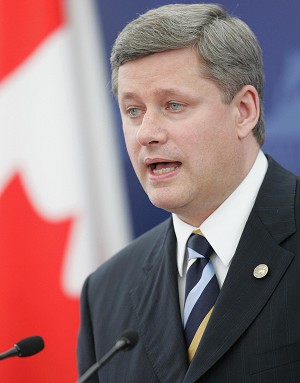
-Stephen Harper is the Prime Minister
-Anyone can be elected prime minister that over the age of 18 and lives in Canada

Stephen Harper:
-The 22nd prime minister
-A prime minister can stay elected if the people keep voting for them.
-The longest term was 21 years
-he assumed office in 2006 so this is his 8th year in office

Canada's Overthrowing:
-A prime minister is in office until he or she resigns, is dismissed, or dies
-The lifespan in parliament is up to only five years
-Canada holds an election for pm every four years
-The next Canadian election is October 19, 2015


Japan:
Japan's Government:
-Japan has a parliamentary system, a constitutional monarchy, and is unitary state.
-Parliamentary System: a system of democratic governance of a state in which the executive branch obtains its democratic legitimacy from, and is held accountable

Prime Minister:
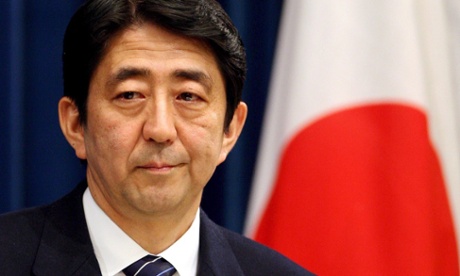
Shinzo Abe: The diet of Japan votes on the prime minister

Change in Leadership:
-Riots
-Impeachment: a formal process in which an official is accused of unlawful activity
the outcome of which, depending on the country, may include the removal of that official from office as well as criminal or civil punishment
-Re-elect

Emperor Akihito:
-Was born on 12-23-33 in Tokyo, Japan
-He began his education at the Peer's School in 1940, but left for WWI
-Returned in the late 40s

In Japan it's not usual for the leaders to want more power for more years then given.


TO BE CONTINUED.....................


Wednesday, November 5, 2014

Presentation Day

Today in Human Geo we started presenting our presentations:

Here are my notes:

France:
-France is republic government with a semi-presidential system; a republic government is when you have a president and a prime minister.

-Leaders: Francois Hollande and Prime Minister Manuel Valls.

-The President is apart of the legislature and the Prime Minister is apart of the judicial branch.

-Hollande (The President): Part of the Socialist party, ran in 2012 and is going to run again in 2017
shares power with the Prime Minister.

-Valls (Prime Minister): Was elected into office on April 1, 2014; He was appointed by the President; INTERESTING FACT OF THE DAY: He was born in Barcelona Spain (BARCELONA SOCCER TEAM YAAAAA) and got French nationality at 20 years old

-Republic:  A state in which the supreme power rests in the body of citizens entitled to vote; Republic means "public thing".
France's present government has existed for 56 years (started: October 4, 1958)

-President: The president can be president for 5 years

-Ways to impeach the leaders: New election, Revolution, boycott, Assassination.
The cabinet is in charge of everything in France.
Censure Motion: A statement or vote which states that a person in superior position is no longer deemed to fit or hold that position.

-Union for a Popular Movement: "UMP" is the second most powerful political party in France.
Formed in 2002 as a merger of several centre-right parties under President Jacques Chirac
-Nicolas Sarkozy, former leader of the UMP, was elected President but was defeated by Socialist Francois Hollande
-The leader of the UMP is now Jean-Francois Cope.
-France has a lot of parties.

-Election of 2017: Francois Hollande is likely to run for President once again for his second and final term.
-Potential Runner-Ups: Hollande, and Sarkozy and others.


China:
Government Type: China is communist.; The government controls EVERYTHING, to store prices.
Everyone gets the same amount of money; Everyone has a middle class life and the same amount of money, no poor people.

TO BE CONTINUED....


Tuesday, November 4, 2014

Cancer Awarness Day at JC

Today in Human Geo we were suppose to present our presentations.

Instead we went up to see the Smoking, Breast Cancer, and Alcohol things. It was pretty interesting, especially the smoking section.
The lady and I had a discussion about what's in the cigarettes. Did you know rat poisoning is in it? :O

They showed us a healthy heart and a smoking persons heart and it was fifthly but it made you think.
She also said that second hand smoking irritates people with asthma, which I know because I have asthma and even being around it, I start getting short of breath.

We also got to see our faces in this analyzer. My face for the most part was very dry and had a little bit of signs of skin damage from the sun. They gave me some sun screen and what the things on your face mean.

Today's class was a good class.

Monday, November 3, 2014

Powerpoint Again

Today in Human Geo we got our quizzes back and we went over them. We also had a shadow that liked One Direction and 5 Sauce, so that was great :D !

Next Mr. Schick asked the whole class  if we were ready to present our power points but no one raised their hands. Ariana and I were ready but we didn't want to raise our hands lol.

But it was good that we worked on them again because we got more interesting slides for the presentations tomorrow. Not to brag or anything but our power point is awesome and we worked really hard on it so I think that we will get a really good grade. (:

So added some of how the elections in Germany work and about the Bundestag, and it was good.

Also the bells were out of whack so that was great.............. Hopefully they'll be fixed soon.

We didn't really do anything else but that so byeeeeeeeeeeeeeeeeeeeeeee.

I leave you with a picture of these beautiful human beings.

 Buy FOUR on iTunes ;)

Wednesday, October 29, 2014

Powerpoint 3.0

Today in Human Geo, we worked on our powerpoints once again.

Arianna and I finished the power point today with only 6 slides but Mr. Schick told us that we didn't really need any more slides.

My laptop was also dropped... but we won't talk about that.......

And basically we just sat and waited for the bell after ward.

Tuesday, October 28, 2014

Powerpoints Continued

Today in Human Geo we continued with our power points about our country, Germany. Arianna and I found out more things about the history and how the Chancellor and Presidents job work and how they are elected.

For the President, the power to impeach him is if the Bundestag impeaches him for violating the Federal law. The Chancellor can also be impeached by the Bundestag if they do not elect her to be Chancellor of Germany.

Some of the history of the President and Chancellor office. We aren't finished with that slide yet, but I found out that The President office was established by the Weimar Constitution after World War I. After the first President, Paul Von Hindenburg, died out of office the President and Chancellor's offices merged. And that's as far as I got before the bell.

I also found out that the Chancellor has to be nominated by the President after he is in office, then there's a secret ballot from the Bundestag. If they don't like the nominated Chancellor then they have two weeks to find their own and that will be the new chancellor.

Germany's officers are very interesting.

Auf Wiedersehen (:

MONDAYS CLASS OOPS

Monday in Human Geo we were told to go search facts about a certain country with our partners.

At first I wasn't going to have a partner because I'm not good friends with a lot of the people in that class...... but then my partner became Arianna (: so anyway, we had to take a country 'Germany' but Germany's my heritage and awesome ! ;) so we looked up the kind of government and then we had to define the kind of government Germany had.

Germany is a Federal Republic, and that means that it is a form of government with a constitution and it's self-governed.

Next we had to see how long they have had their own government.

Germany has been independent since October 3, 1990. After World War I, West and East Germany were separated by the Berlin Wall. But East and West Germany reunited on this date.

Finally, we had to figure our ways of how the President or Chancellor or whatever would we able to be charged for to get them out of office.

Arianna and I thought it was a good idea to give the President and Chancellor Joachim Gauck and Angela Merkel of Germany's background.
We only did a little bit but it was really interesting. President Joachim Gauck is a pastor over a Protestant Church and Chancellor Angela Merkel used to be a scientists.

We have not gotten to the part about how to get rid of them but we will do that Today.


Friday, October 24, 2014

Post 18

Today in Human Geo we took a pop quiz about the Presidents of the countries..................


It wasn't hard but it took me off guard.... Chika got a better grade then me but that's because she's the smartest person ever.


But I guess my grade won't change that much.

I got suggested to go into an honor class today because of the class, I will consider it.


Until next time..

Thursday, October 23, 2014

Post 17

Yesterday in Human Geo we had a shadow and continued talking about the history of the Presidents of different countries. We found out really interesting things about the Presidents that we would've never known. The presidents of the country had really interesting lives before presidency.


I found out that Vladimir Putin was very poor before he became President. He once said he remembered chasing rats out of his small apartment. His apartment was very small and had three families living in it.


And then another had a very wealthy family, so it shows that the Presidents were "people too". 


Tuesday, October 21, 2014

Todays Class

Today in Human Geo we talked about the history of the Presidents that we had to post in the previous post.

There were actually very interesting facts that we heard today in class like:

President Dilma Rousseff of Brazil, was imprisoned for a fairly long time for standing up for her country. Coming out of the prision, Dilma acquired thyroid cancer. With treatment and medical help Dilma over came the cancer and is now a cancer survivor.

It turns out that Vladimir Puttin is quite cocky. Whenever he goes sporting, or hunting, or swimming he almost always has photographers with him to take pictures of his manliness. He does this because he wants to show his people that he is a strong man and no one with mess with his country.

Vladimir Puttin is also a black belt in karate.

The Prime Minister of Germany actually has the most popular in their government, she was rated five of the most powerful women in the WORLD!
President Simon Peres is 91 years old!

A lot of great facts for told today in class, we definitely learned a lot about the countries leaders and their background.

Monday, October 20, 2014

Countries & Forms of Goverment


President Joachim GAUCK
Germany
Government: federal republic


President Pranab MUKHERJEE
India
Government: federal republic


President Francois HOLLANDE
France


President Bashar
Syria
Government:
republic under an authoritarian regime


Prime Minister Shinzo Abe
China
 A parliamentary government with a constitutional monarchy


President XI Jinping
China
Government: Communist state


Prime Minister Stephen Joseph
Canada

Government:
parl. democracy,federation,constitutional monarchy


President Vladimir Vladimirovich PUTIN
Russia
Government: federation


Dilma Rousseff
Brazil
Government: federal republic


President Shimon PERES
Israel
Government:
parliamentary democracy
 

Friday, October 17, 2014

Sick Day

Today in Human Geo, I wasn't there because I have a viruses. But I looked on the Mr. Schick's website and I happen to know who that woman is.

She's Dilma Rousseff President of Brazil. She is the first woman to hold a high office like President. She's the 36th President of Brazil.

I only know this because I'm a big fan of the Brazil National Soccer team! ;)


Tuesday, October 14, 2014

Post 16

Today in Human Geo, the people that were not here on Friday for the test re-took their test. Myself included because of freshman retreat.

I think that the test was a little tough, especially because of the ten minute thing we had to do with the CIA World Fact book. We had ten minutes to answer 12 question about different things on the world fact book. At one point I thought that I wasn't going to have enough time because I couldn't find on of the questions, but literally at the last two minutes or so I was looking under the wrong thing and finally found it.

The population pyramids were a little hard with trying to figure out what country the pyramid was representing. But other than those things it was a pretty easy test although I don't have a clue what I'm going to get.


I guess we'll just wait and see......

Friday, October 10, 2014

Freshman Retreat

Today I was not in class because I had my freshman treat today.

Wednesday, October 8, 2014

Chapter Review Time....

Today in Human Geo, we reviewed for our test that's on Friday. Here are my fabulous notes I took.

So basically we have to get familiar with the CIA World Fact Book. On the day of the test we will have about 10 or a little more minutes to complete the questions given on the test- all searched in the CIA World Fact Book.

Next we have to study our notes, blogs, and also the teachers blog.
This will not be an open-notebook kind of test or "open-blog", we are going to have to memorize everything we learned like a normal test.

REVIEW:
  • Memorize the terms: life-expectancy, crude birth rate, crude death rate, developing nations, developed nations, rate of natural increase, net migration rate, immigration, emigration, push forces, pull forces, and total fertility rate.
  • If you know the crude birth rate then it shows you the rate of natural increase
  • Crude birth rate: places were people are dying then being born- exs: Japan, Germany, Italy etc. (The places were the crude death rate is a higher number then the crude birth rate which brings that countries population number down.)
  • Developing nations are countries that are not doing well economic wise, or health wise etc. (pre-industrialism)
  • Developed nations are countries that are selling and buying a lot of things, economy is decent etc. Like the USA. (post-industrialism)
  • You can figure out the birth rate of natural increase by subtracting the CBR by the CDR
  • How to get the migration rate: subtract the emigration from the immigration and if the number is positive then the population is growing and has more immigrates, but if the number is negative it's the opposite.
  • Immigrants: people that are traveling to go to another country permanently        
  • Emigration: people leaving their country to come to a new one
  •  (example: someone from France comes to America- they are immigrants to America but emigrants to France.)
  • push force: something that causes one or more people to leave their country. Like something acts like it forces them too. (ex: health issues, dictatorship, wars etc.)
  • pull force: things that's make people want to come to that other country. (ex: America. the land of opportunity)

Tuesday, October 7, 2014

Spotify!

Today in Human Geo Mr. Schick told about this project Spotify is doing with schools.

Spotify is going to be teaming up with teachers and students, and they are trying to find a way to relate music on Spotify with the lesson you are learning in your classes.
For example, say you're talking about migration in your history class. You can search songs about moving on to another country, state, etc. It could help you remember what you learned and what you're learning about.

I think this can be a very affective thing for us students because we listen to a lot of music- I know I do.

So basically today we only made Spotify accounts if we didn't have one and Mrs. Schick gave us a code for a three year premium with Spotify and we got to listen to music for the rest of the class.

Overall, it was a good class

Friday, October 3, 2014

America: not the best country in the world?

Today in Human Geo we watch a video about newsmen (and women) having a discussion about political problems and issue, it was a TV show so obviously it was not real but it did have a point. Throughout the video this guy was listening to the two other people talk.

This guy was asked political questions and he played it off as a joke because he did not want to express his opinion. Finally, I woman that was at the college these three people were at, asked a question.

What makes America the best country in the world?

Now the obvious answers were about things like having freedom opportunity etc. When the man was asked what his opinion was he joked about the best thing about the country was the New York Jets. The host I assume, was fed up with his jokingly answers and demanded he'd answer a legit answer or consequences.
There was this woman that was in the audience. She had a sign up saying "IT'S NOT" as in America is not the best country in the world.

Finally the man basically lost it. He ranted some pretty good points about the how America definitely use to be the best but is now, not that great.

After we watched the video, Mr. Schick asked our thoughts and comments. There were opinions like "maybe it's the congress and president fault" "we aren't a united country as we used to be."


I don't really have a "good" opinion but here's mine that I said in class and more that I just came up with.

First, I think that instead of complaining like little helpless people about the President or Congress, we should basically do something about it (if you don't "like" him) and actually vote for who we want. We has a people have the power for these kind of things. Plus, don't you think the President is doing all he can? I mean this whole stupid mess is not all his fault, he walked in a mess with this country that I'm sure he's trying to clear up the best he can. Don't you think we've had worst presidents? But the point is, if you want a certain person or party to be in office, stop being lazy and get out there and vote.

Another thing the video brought in was that no, we are not the only country with freedom. Places like China, Japan etc. have freedom, they are doing better than us economic wise. I agree with this point the video brought out.

But to conclude, we said in class today "You can like your favorite football team, but you can still say your comments on them."
I love my country, sometimes I do think we could do better in a lot of things, but the point of this freedom and the amendments is to give us these opportunities that a lot of countries do not have, so we have to take that and run with it.


Wednesday, October 1, 2014

Population Pyramid 2.0

Today in Human Geo we finished the rest of the video about the population pyramids.

The second half of the video talked about:

The birth rate:
The USA birth rate is lower than it should be, we learned that we get more of our population growth from immigrants.

Birth Rate:
-2014: 8/1000 births

Death Rate:
-2014: 9/1000 deaths

We learned that a population pyramid is not just useful for keeping track of the present and furture populations, but it needs track of the past as well.
For example, the United States population pyramid still has it's effect in the pyramid from the baby boom stage. Mostly people in the 50-60ish ages are very high in number because  at that time the increase of the population in the baby booming stage.

Also about the past, China still has effects from there "one child" rule, where the government made it a law that there was too be only one child per family. This rule caused a sex-selective abortions. Sex-selective abortions was when the mother of the one baby she was having aborted the baby if it was a girl because man were more preferred for things like jobs to take care of his family. Woman on the other hand were not offered many jobs to made a business or a good living. So the mothers felt that if they could only have one child, then they should have the baby that was going to end up more successful and support his family. This caused more population in men then woman so it effected their population pyramid.

Finally we learned that it is very important for scientists have some kind of explanation or demonstrating of the populations because all of the poor countries with less food etc.

Tuesday, September 30, 2014

Population Pyramid

Today in Human Geo we talked about Population Pyramid.
A Population Pyramid is a tool we use to keep track  of all the different countries population.

In class we watched the video I linked in my previous blog. We didn't finish it, but we talked about things like how these pyramids show how poor a country is or how rich a country is- in supporting their own country, with health care etc.

For example, in this pyramid:


It's the United States most recent population pyramid, the lines are much longer for the baby boomers (age 50-60) because they had a high reductive period.

We also talked about the three stages that countries go through:

  • pre-industrialization: not much economic growth, like poor countries
  • industrialization: periods like the baby boom stage; tons of economic growth
  • post-industrialization: like todays economy

Monday, September 29, 2014

Post 15

Today in Human Geo, Mrs. Schick was absent so we had Mrs. Smith. We were left instructions on the Human Geo blog to watch this video:

 https://www.youtube.com/watch?v=RLmKfXwWQ

It was talking about why population pyramids are made and how they are used. Population pyraminds help us keep track of the population for not only people living but for people that are dying too. It helps because us because we don't have to sit down and actually count the whole population of say China- who has just over a billion people living there- and try and find out what the death and life rate is.
Population pyramids are good for helping with history projects or any projects dealing with the population of the world. It can tell you about the population growth and decrease this year or 5 years ago, it can even predict the future!

This is a really cool website that tells you all about present population, birth rate, etc! It has everything (:

Wednesday, September 24, 2014

I'm going to brag a little...

So today we got our Chapter One test back. I did waaaaaaaaaaaaaaayyy better then I expected.

I GOT A 96%! I was one of few people that got all the questions right and a good grade of the essay questions. It was a pity to know that my Human Geo class is 6th in the grading placing but I'm just happy I got an A!

Now as I said I got all of the questions right in the multiple choose, (even the one I guessed on), but I wish I could have done some of the essay questions better. Like the one about Socrates trail and death, I think I could have explained it better. Like explain what he actually did and why he choose to drink Hemlock on his own will. Also the question about globalization, I could've explained it better. But I think I VERY well!

Monday, September 22, 2014

Day 14

Population and Migration 2.0:
 Measuring Population-

  • Crude birth rate: number of births per 1,000 of the population
  • Crude death rate: number of deaths per 1,000 of the population

Rate of natural increase (RNI):
  • Produced by subtracting the death rate from the birth rate.
  • This gives us the natural growth rate in percentage form for a country or region

Net Migration Rate: The difference between the number of persons entering and leaving a country during a year.

-An excess of persons entering the country is Net Immigrants
-Written as a positive number
-Ex: Canada has 5.65 migrants per 1,000 population
-United States: 3.62
-An excess of persons leaving the country is Net Emmigrants
  • Written as a negative number
  • Ex: Mexico has -3.11 migrants per 1,000 population
  • It was: -3.61 two years ago.


United States population growth rate: (Renewed)
-Last year: 3.62
-This year: 0.77%

-Birth rate: 13.42  births
-Death rate: 8.15 deaths

-Migration rate: 2.45 migrants

-Life expectancy at birth:
Total Population: 79.56 years
Male: 77.11 years
Female: 81.94 years

Day 13

Population and Migration:

- Population and Settlement PowerPoint
  • over seven billion people on the planet right now.
  • increasing by over 73 million per year
  • 90% of this population growth takes place in he developing countries of Africa, South and East Africa, Latin America.


  • In 1804 America's population reached 1 million for the first time; it took 10,000+ years to get to a million
  • In 1927: another million in only 123 years
  • 1960: next million in only 33 years
  • 1974: next million in only 14 years
  • 1987: next million in only 13 years
  • 1999: next million in only 12 years
  • 2011: next million in only 12 years again

Life Expectancy:
- the average number of years to be lived by a group of people born in the same year.

Wednesday, September 17, 2014

Day 12

Today in Human Geo, we had a test on all the things we have learned so far.


For myself the test was pretty easy. It helped that we could use our blogs, but I studied and it wasn't that hard to remember all the things we talked about so it was an easy test!

I think I did fairly well, I known most of the answers. and I think I'm going to get a good grade (:


I think the test was fair, it didn't have any really hard questions and the essay questions weren't hard to answer or expound on.  


It was a nice test!

Tuesday, September 16, 2014

Day 11

Today in Human Geo, Mr. Schick was in Philly for something and wasn't in class today. So we had a sub that was dressed up like a Scooby Doo character...


But basically today we had to go onto quizlet.com and make online flashcards for our test today.  Our test will e on the things we have learned so far like, globalization, did you know 3.0, babybooming- everything we've learned so far.


In class I made my flashcards based on the questions we discussed in class and also question I made me myself to help me study. I probably will use them too help me study. It's a very good way to study!

Monday, September 15, 2014

Day Ten

Today in Human Geo we discussed the test we have on Wednesday. Mr. Schick asked us about what questions we would like to see on the test. We talked about a lot of very good questions. We also had a really good talked about the future from the Did You Know 3.0. We talked about things like the IPhone and IWatch. The IWatch could be the new wallet, it has things on it like your credit card information.

Some of the questions people said were:

  • Who wrote the Message to Garcia? - Elbert Hubert 
  • The purpose of Elbert writing AMG? - to get the lazy people motivated 
  • What war was being fought during this tale? - Spanish-American War
  • Name an element of globalization? - changes traditions in other countries, tribesmen in Africa talking on cellphones etc. 
  • Positive & Negative in globalization? - Positive: the world is more connected (connectedness), Negative: because there building new factories everyday and it is polluting the air which give them health problems, and also cause the death of animals (less birds etc.) 
  • Ancient Greece Definitions
  • Why is the American language so important? - because it is the international language of business. 
  • How did the American language become the international language of business? - When the Americans won World War II in the Babyboomer stage; countries like Britain got destroyed by the war and it was depressed other there, so while they were rebuilding, we were making businesses and selling and it was an economic boost.
  • And lastly Socrates famous quote was? - 
"The un examined life is not worth living."
He was saying that too not question things is not a very good life to live. You should be able to think on your own, not have someone tell you what to think. 

Saturday, September 13, 2014

Day 9

Yesterday in Human Geo we had a discussion about Globalization.

-Globalization is the connection of different pars of the world. (Inner connectedness)
  • results in the expansion of international cultural, economic, and political activities.
  • examples: modern restaurants, like McDonalds are mostly all over the world but it's an American restaurant.
The economic part of globalization is- say when someone buys food from a Chinese McDonalds, American businesses get profit from that money.
  • in also places like McDonalds can change other countries culture because now they get fast food instead of having traditionally sit- down talking dinners.
-The Chinese also smoke more than Americans. They buy American cigarettes. Chinese have more population so greater number of smoking.

The Silk Road- In BC people had to travel on a road to get silk from China, at the time China was the only silk making country. So many people started traveling on that road that they called in the "Silk Road".

Globalization includes religion, technology, language learning, and exchange.

Wednesday, September 10, 2014

Day 8

Today in Human Geo, we talked about our previous blogs. We had a conversation about the facts from the video we had to watch.

One person said that it was creepy how 1 of 8 people last year met and got married.  I would definitely agree but it doesn't surprise me. It's also kind of, well more than kind of, but dangerous to met someone online, I mean unless you know that it's 100% a real person or they  are telling you the truth that that picture and information is really their because people can steal pictures from other peoples profiles and their information and then when you go to meet that lovely person you talked to online it turns out to be like an ax-murderer. Online dating websites are okay for the most part, I just think maybe people should stick to the old fashion way. In my opinion.

The second fact we had a loooong discussion about was that China will become the first English speaking country in the world. When I first say that I was surprised, but then our teacher told us it was because they have over a billion people living in China that have English as their second-language at a young age. They also learn English because it is the "language of business". We learned that not just people from China, but India and other countries, what to learn our language because it is good for communication in business, they get more jobs, etc.
There are up sides and down sides to this, the down side is, they will most like take our American jobs because they are more motivated to actually do the job and they work for way less money then Americans do. Up sides to this is that we buy things and have business from them. Everything you see or wear, or possess is either "Made in China" or "Made in India". It's also good for our businesses, if a foreign person is willing to work for less pay then a home-breed then businesses save money and that businesses stock or product will be lower for us buyers.

It was a good discussion.

Tuesday, September 9, 2014

Shift Happens

Did You Know

Today in Human Geo, we watched a video called "Did You Know" also known as "Shift Happens".  It is a rather interesting video about how our world around us is changing every single year. It points out the things we may not notice because our generation is use to this kind of change because it happens so gradually and quickly. Like for examples, did you know that ...

1. China will soon become the number one English speaking country in the WORLD!
  •    At first I honestly thought this was inaccurate because you would think that America would have the most English speaking people right? Wrong. We learned in class today that China will become the number one English speaking country because their population is just simply bigger than ours. China has a few billion while America has a maybe a few million. Plus, most of our population is from different countries also. We learned that this will change our country because we are and will be completing for jobs with these people.

2. 1 out of 8 couples married in the US last met online.
  • This did not surprise me. Mainly because I've seen all those E Harmony, or Match.com commericals saying how many people have met online. I think that eventually everyone will start meeting their "soul mates" online because they wont want to do it face to face they would rather have a person matched to them then start the face to face stuff.

3. Twitter users tweet about 50 million tweets per day.
  • This didn't surprise me either because I am one of those awesome twitter users. I tweet everyday, and if I don't tweet, I'm on twitter. Twitter is a good way of communicating with people from different states and or countries. So many people use twitter daily, so that number definitely grows every day.

4. The number of texts sent everyday exceeds the total population of the plant.
  • Anyone who has a phone, texts. They may text a couple times a year or a couple times a minute. Text is a HUGE way we communicate with people today. Mostly people, like myself, prefer a text over a call. I agree that in some ways it's a bad thing because we have lost face-to-face communication where we actually talked to someone. But my opinion to it is that, this is the 21st century it's not like it was 20 years ago, technology is just going to vastly grow, so everyone is just going to have to learn to live with it.

Technology plays a HUGE role in my life. Technology has been apart of my life for literally all my life. My parents are very tech-savvy. My mother works with computers like designing and stuff and my father uses computers a lot too. I had my first phone at a young age, and even before that I had a computer in my possession, DS's, digital cameras, TV etc. I like technology, I think it's a very good way to improve our world with a lot of things and help us human beings.


Monday, September 8, 2014

Definition 2.0


  • agora-  in Ancient Greek cities, an opened space that served as a meeting ground for various activities of the citizens, a gathering place or assembly. The agora was the venter of artistic and athletic, spiritual, and political life of the city. 
  • Arête- In it's basic sense, means excellence of any kind. In it's earliest appearance in Greek, this notion of the fullfillment of purpose of fiction. Moral vulner; the act of living up to ones full potential. 
  • Polis- It was the typical structure of a community in the Ancient Greek world (centre urban area, body of citizens.)
  • Year 508 BC- Klisthenis came to power. Birth of democracy; the first democracy. 
  • Socrates- He was a Classical Greek philosopher who is created with laying the fundamentals of modern Western philosophy; known for creating Socratic irony and the Socratic Method. 
  • The death Socrates- He was sentenced to death because he refused to recognise their gods. Also they thought he was introducing different gods (disrespecting the other gods), and  "poisoning" the youths minds so they sentenced him to death by Hemlock (a poision.) 
  • The Socratic Method- the Socratic Method was when he would ask a question and answer, he would get a student to state a thesis and then by asking him questions would prove the thesis led to a contradiction. 
  • What the Greeks meant when they called you an idiot- It meant a private person/ layman that didn't participate in politics. 

Friday, September 5, 2014

Definitons

  • agora- In ancient Greek cities, an open space that served as a meeting ground fro various activities of the citizens. (via Britannica.com)
  • arête- In its basic sense, means excellence of any kind. In its earliest appearance in Greek, this notion of the fulfillment of purpose of fuction. (via randalvegter.com)
  • polis-Was the typical structure of a community in the ancient Greek word. (via ancient.eu)
  • The year 508 BC- Three-years of conflict, Klisthenis came to power, he placed the foundations of Athenian democracy, with serious reforms. The increase of the races from four toten and the parallel disturbution of the city in Trities and municipalities. ( via Greece-Athens.com )
  • Socrates- He was a classical Greek philosopher who is created with laying the fundamentals of modern Western philosophy; known for creating Socratic irony and the Socratic method. ( via ancientgreece.com )
  • The death of Socrates- He was sentenced to death because he refused to recognize the gods recognized by the state. ( via eyewitnesstohistory.com )
  • The Socratic Method- The Socratic Method was a stage in the history of dialetic, although it is still used today. It is a process of question and answer. He would get a student to state a thesis and then by asking him questions would prove the thesis led to a contradiction. ( via ancienthistory.about.com )
  • What the Greeks meant when you were called an idiot- It meant a private person/ layman that didn't participate in politics.

Wednesday, September 3, 2014

Day Four

09.3.14

For the first part of the class, again, we got our blogs all together and made sure everyone had them. Next, Mr. Schick took the grades for having a composition notebook for our notes.


Today we talked a little bit about "A Message to Garcia".
We learned that during the Spanish-American war, President McKinley desperately needed to get a letter to the head of the insurgents, Garcia.

Elbert Hubbard, the writer of this essay, was using this story as a metaphor. He was trying to get the point across that, we need to know how to do things without questions asked, without laziness, or trying to get out of it. Don't complain, just do what you're asked to do and thank God you have the ability to still do it.
Elbert Hubbard's essay was recognized and, later reprinted virally 80 million times.

Next, we were talking about voting.

We learned that one year, only 53% eligible voters voted in the USA. Then the next four years, 61%, the next 63%, and the next 59% and so on and so on. That's only a little over a half of the population on eligible voters. In other countries like, Peru, Iran, and Rwanda had 86%, 75, and 89% vote every year. So what's wrong with us Americans who have a right to vote? Even if you don't like the people that are running, you still should vote. Voting is very very important. It's important because the people that don't vote (usually 18 to 35), are the ones that are going to live to have to deal with that president or person in any office. People like to complain about the President and or the people in office right now, and those same people are the ones that said "Oh, I don't feel like voting." "I'm not going to vote."

Tuesday, September 2, 2014

My ALS Ice Bucket Challenge :)

For Mr. Schick's class today, we basically just talked about how to properly do our blogs.

But most importantly, we talked a little bit about the horrible diease ALS.  ALS affects about 10,000 people in the USA. Those people are mostly young women and men, who will only live up to 2-5 years. Not many people know what the diease ALS is, they just know those "crazy people" dumping ice cold water on their head. But this diease and awareness is much more than that. The ALS diease starts out with the affected person losing feelings in their arms and hands, eventually it's their legs, their upper body and then they start to slowly have trouble breathing.

I think that it's good that ALS is becoming noticed more and more, because people like celebrities with money just sitting around, not using. They are giving money to help cure then terrible diease. Even if you have only 10 little dollars to donate, every single dollar counts and the people with the diease and the families appreciate it so much. (:


Day One

08.26.14

Today was the first day of Human Geo as a freshman!


   It was basically a review day for the class because obviously we are new.


  • First, we got to know our teacher, Mr. Schick.  He told us that we needed a Gmail account in order to use blogger.com

  • Next, we added Mr. Schick's blog page too our favorites bar on our computer.

  • A Gmail account is required.

  • The people that didn't have a Gmail account, made them.

  • The people that did, started too sign up for blogger.com

  • Mr. Schick throughout the class told us about using our blogs and homework.

  • A book was also thrown on the floor

  • In Human Geo, we are not going to be using a lot of paper, only for test and the final exams.

  • We are to have a composition notebook to take notes in class so it will be easier too write our blogs.

  • We also have the composition books so the teacher knows that we are actually paying attention and not just fooling around on our computer.


    Mostly our teachers just want us too have fun this year!


Friday, August 29, 2014

Day Three


Notes for today's class:

-Today we talked about Babyboomers: (1945-1960) Years after WW II
  • After the war, there was a very good economy. Men got nice jobs, nice possessions, etc.
  • People started buying newer inventions like washing machines, dish-washers, toaster ovens etc.
  • People were buying houses.
  • There was economic growth.
  • They were making bigger families. (A normal family was 4-5 children)
  • People had to make money and a lot of good jobs were available.
  • Big families were common.
  • They didn't quit jobs, they usually stuck with the job they had.
  • They all stayed in one place, families were rarely scattered.


-MilLenials (2000 +)
  • Known as the "lazy" generations ...
-A message to Garcia
  • Written about 100 years ago
  • During the Spanish-American War, the writer was talking about how that present generation was very lazy. He gave an example of a good, hard-working man, he told the story of a man that was asked to deliver a message to Garcia without questions asked, and he was trying to make the point that in that generation at that time, that person would've asked questions about were to go, what's it's for and so on and so on, and how it's hard to find a hard working person little the man that delivered that message.
-Arête: equal voting (everyone that was allowed to vote, was expected too)

•5 things that can improve my freshman year
 
1. Organizing: It is very important because a messy area is a messy mind and having a messy mind, is confusing and it won't benefit for you.

2. Getting your work done correctly and on time: This is also important because you want to keep up with your work, and not turning in assignments is obviously not good for your grades and if it's not correct, the same thing applies.

3. Good study habits: Having a study plan is VERY important! It's important because if you have a strategy with studying then you'll remember a lot more, a lot easier and you will ace every test!

4. Concentration on your goals: When you have concentration and an interest in the goals you set for yourself, you will want to get to those goals and you'll accomplish them because you're determined.

5. Determination: Like the concentration, determination goes along with it. You have to want to reach the goals you set and you will appreciate it in the long run.

(:

Wednesday, August 27, 2014

Day Two

Day Two

Today in Human Geo, some people did not finish or email their blog to Mr. Schick so we took most of the class explaining the right URL to email and emailing the correct link to our blogs.

For the rest of the class we went over the Class Syllabus.

Mr. Schick talked to us about where to find him, and where his classroom was.
Next, we talked about the things we needed for class, which was
  •    A pencil
  •    A notebook
  •    Your computer

We also talked about our class grading system and what everything like, blogging, homework, projects, test, and quizzes are worth in this class.

To prepare us for college Mr. Schick does not give extra credit. We learned that it isn't really fair or good to depend just on one assignment at the end of the semester to determine our grade.

For Late Assignments, everyday that it is late for three days 10% is taken off of your grade, with expectation, and even after three days you still have to turn your late work in for a zero.

Human Geo will use a lot of technology.